
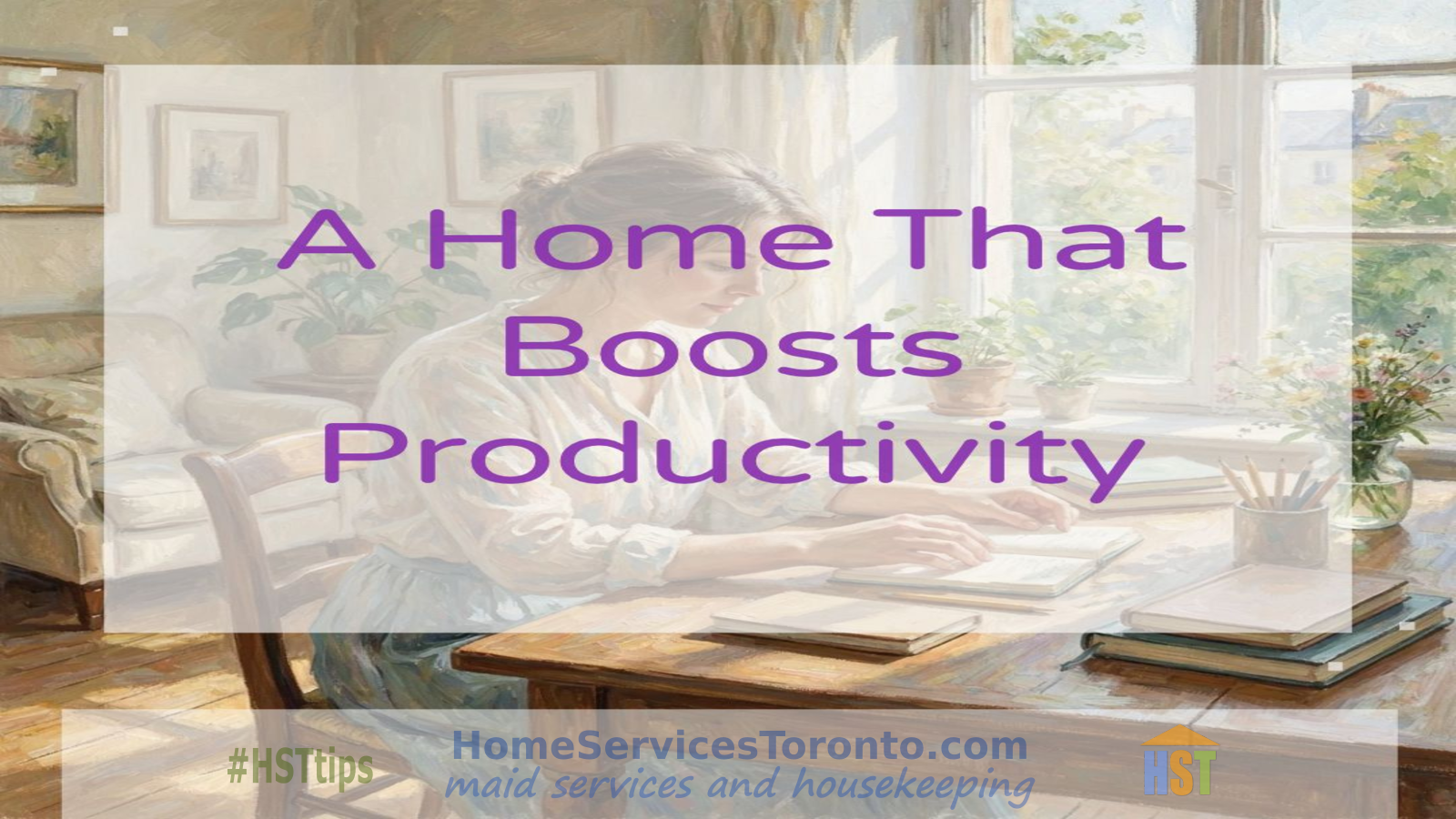
A clean, organized home designed to support focus, comfort, and everyday productivity.
A productive home doesn't have to look like a perfectly staged office or a magazine spread. In fact, the spaces where we live and work often function better when they're comfortable, practical, and easy to maintain. When clutter piles up, surfaces become dusty, or every room seems to demand attention, it's harder to settle into meaningful work. A clean, organized home can remove many small distractions before they interrupt us. By making a few thoughtful changes, we can create a home environment that supports concentration, energy, and a healthier daily rhythm.
Productivity at home isn't only about having a desk and a comfortable chair. It also depends on how easily we can find what we need, how much visual noise surrounds us, and whether our home feels refreshing or exhausting. Even simple household habits can influence how smoothly the day unfolds. When cleaning, organizing, lighting, storage, and routines work together, the home becomes an active support system rather than another source of stress. Let's look at practical ways we can create a home that boosts productivity without turning everyday life into a complicated project.
1. Create a workspace that supports focus
Clear clutter from your main work areas
A cluttered workspace can make it surprisingly hard to focus, especially when we're already juggling responsibilities throughout the day. Papers, dishes, cables, packages, laundry, and miscellaneous items can quietly compete for our attention even when we're trying to ignore them. We don't need to create a perfectly minimalist room, but we do benefit from keeping the area around us reasonably clear. A quick cleaning routine before work can remove obvious distractions and make the transition into focused time much easier. When everything unnecessary is moved out of the way, we can spend more mental energy on the task in front of us instead of thinking about what still needs to be cleaned.
The easiest approach is to give frequently used items a designated home. If notebooks belong in one drawer, charging cables stay in one container, and office supplies have a specific shelf, we won't have to search for them every time we need them. This kind of organization reduces small interruptions that can add up throughout the day. It also makes cleaning faster because we're not constantly deciding where each item belongs. Over time, a tidy workspace becomes easier to maintain because putting things away takes less effort than letting clutter accumulate.
We can also use a simple reset at the end of each work session. Spend a few minutes returning supplies to their places, clearing the desk, and removing anything that doesn't belong there. This creates a useful boundary between one task and the next, particularly when our home serves several purposes throughout the day. A clean desk can also make the next morning feel less demanding because we're starting with a prepared environment. The goal isn't perfection; it's creating a space that makes the productive choice easier.
Choose furniture that helps you stay comfortable
Comfort has a direct practical role in productivity because it's difficult to concentrate when our body is constantly asking us to adjust, stretch, or change position. A suitable chair, stable desk, and comfortable working height can make long periods of focused activity much more manageable. We don't necessarily need expensive office furniture to improve the situation. What matters most is choosing pieces that fit our body, provide adequate support, and allow us to work without unnecessary strain. A comfortable setup helps us stay engaged with our work instead of repeatedly thinking about discomfort.
The arrangement of furniture matters, too. We should have enough room to move naturally without bumping into shelves, storage bins, or other household items. If possible, the workspace should have a clear surface for the primary task and enough nearby storage for things we use regularly. This keeps important supplies within reach while preventing the desk from becoming overloaded. A thoughtfully arranged room can make ordinary actions feel smoother because we don't have to work around obstacles.
It's also worth considering how the workspace fits into the rest of the home. A desk positioned in a busy walkway may expose us to constant movement and interruptions, while a quiet corner can make concentration easier. If we work in a shared home, even a small visual boundary can help establish that the area is being used for focused work. We can use a bookshelf, small cabinet, plant, or room divider to create a subtle separation without making the space feel closed in. The best home office setup is one that supports our habits while still feeling like part of the home.
Improve lighting and reduce visual distractions
Lighting can dramatically change how a room feels, so it's worth paying attention to during a home productivity makeover. Natural light is especially useful because it can make a workspace feel brighter, more open, and more inviting during the day. When natural light isn't available, a good task light can provide focused illumination without forcing the entire room to be brightly lit. We should also avoid positioning screens where glare makes them difficult to read. A few simple adjustments can make the workspace feel more comfortable without requiring a major renovation.
Visual distractions can be just as disruptive as physical clutter. A wall covered with unrelated items, a television playing in the background, or a pile of household projects nearby can pull our attention away from work. We don't have to remove everything from the room, but we can decide which visual elements genuinely support the atmosphere we want. Calm artwork, a small plant, or a neatly arranged shelf can add personality without creating excessive stimulation. The idea is to create a background that feels pleasant rather than demanding.
A productive home should also support different types of work. Some tasks require deep concentration, while others can be completed while standing, moving around, or taking short breaks. If the room allows it, we can create a secondary spot for reading, planning, or making phone calls. This gives us a reason to change positions without abandoning the workday completely. A flexible environment can make productivity feel less rigid and more sustainable.
2. Build routines around your home environment
Give every task a dedicated place
One of the simplest ways to make a home more productive is to remove unnecessary decisions from everyday life. When common items have predictable locations, we spend less time wondering where something went or searching through several rooms. This applies to work supplies, cleaning products, keys, mail, chargers, clothing, and kitchen essentials. Clear storage systems help us move through routine tasks with less friction. We don't need complicated organizational products; we simply need systems that make sense for the way we actually live.
The best storage system is one that we'll continue using after the initial organizing project is finished. If putting something away requires opening several boxes or moving other objects first, we're less likely to maintain that system. Open baskets, labeled drawers, hooks, shelves, and easily accessible cabinets can make everyday organization more practical. Items we use frequently should generally be easier to reach than things we rarely need. This simple principle can save time every day.
We can also group items according to activity rather than simply by category. For example, a small home office station might contain notebooks, pens, chargers, and headphones together because they're used during the same routine. A cleaning caddy can hold the products needed for a particular area so we don't have to make several trips around the home. Grouping related items creates natural shortcuts. Those shortcuts can make ordinary routines faster and help preserve our energy for more important work.
Prepare your space before starting work
Preparation can be one of the most underrated productivity habits because it reduces the number of interruptions that happen after work begins. Before sitting down, we can take a few minutes to clear the workspace, fill a water bottle, gather needed materials, and put away obvious distractions. This small ritual signals that it's time to focus. It also prevents us from repeatedly getting up to retrieve things we could have prepared in advance. The more predictable the beginning of the work period becomes, the easier it can be to settle into concentration.
A useful pre-work routine doesn't have to take more than five or ten minutes. We might open the blinds, wipe the desk, check our task list, silence unnecessary notifications, and prepare a drink. These actions create a clear transition between household activity and focused work. We can then begin with a specific task rather than spending the first part of the session deciding what to do. A simple starting ritual can become a powerful anchor for the day.
Preparation also helps when the home has competing responsibilities. If we know laundry, dishes, or household errands are waiting nearby, we can quickly handle the most distracting issue before beginning. The key is not to turn preparation into an endless cleaning session. We want enough order to focus, not an excuse to postpone work until the entire house is perfect. A productive home supports progress, even when ordinary household life continues around us.
Use simple cleaning habits to maintain momentum
Regular cleaning plays an important role in keeping a productive home functional because accumulated mess can gradually become another task on our mental list. We don't need to spend hours cleaning every day to make a meaningful difference. Instead, small maintenance habits can keep the most important areas under control. Wiping surfaces, putting items away, managing dishes, and handling small spills promptly can prevent minor chores from becoming larger projects. Consistency is usually more useful than occasional bursts of intense cleaning.
A practical daily cleaning routine might focus on the areas that affect our attention most. We can clear the kitchen counter, reset the workspace, tidy the entryway, and handle visible clutter before the evening ends. These areas often influence how the home feels because they're used frequently. When they stay reasonably clean, the entire house can feel more manageable. That sense of order can make it easier to transition between work, family time, rest, and personal projects.
We should also avoid creating cleaning routines that are too ambitious to maintain. If a schedule requires several hours every day, it's likely to become frustrating when life gets busy. A better approach is to identify the few habits that deliver the greatest benefit and make them automatic. We can then add deeper cleaning tasks on a weekly or seasonal basis. This balance keeps the home productive without allowing cleaning itself to take over the day.
3. Make your home healthier and more energizing
Keep dust and allergens under control
A clean home can feel noticeably more comfortable when dust and other common household irritants are kept under control. Dust often collects on shelves, electronics, furniture, baseboards, and other surfaces that we don't always notice during everyday tidying. Regular dusting can prevent these areas from becoming heavily coated over time. Vacuuming floors and soft furnishings can also help keep accumulated debris from becoming part of the background of daily life. When the environment feels fresher, we're more likely to enjoy spending time in it.
We can make cleaning more efficient by working from higher surfaces down toward the floor. This prevents dust from simply settling onto an area we've already cleaned. Microfiber cloths can be useful for many household surfaces because they help capture dust instead of simply pushing it around. It's also helpful to pay attention to overlooked areas such as lampshades, vents, window ledges, and the spaces beneath furniture. These small details can make a noticeable difference in how clean a room feels.
Keeping fabrics fresh is another important part of home maintenance. Bedding, curtains, cushions, rugs, and upholstery can collect dust and everyday debris, so they deserve attention as part of a broader cleaning routine. We don't have to clean every fabric item constantly, but creating a reasonable schedule prevents these tasks from being forgotten. A cleaner environment can make the home feel more inviting and easier to use. That matters when we're trying to build productive routines that last.
Bring fresh air and natural light indoors
Fresh air and natural light can make a home feel more open and pleasant, especially during long periods spent indoors. Opening windows when weather and outdoor conditions allow can refresh rooms and reduce the feeling of stale air. Natural light can also make daytime spaces feel more energetic and welcoming. We can take advantage of these simple environmental changes without purchasing new equipment or redesigning the house. Sometimes the most useful productivity improvements are already available to us.
Plants can add another layer of comfort and visual interest to a workspace. A few well-placed plants can soften a room and introduce natural shapes and textures without creating significant clutter. We should choose plants based on the available light and the amount of care we're realistically willing to provide. A plant that constantly needs attention may become another distraction rather than a benefit. The goal is to create a pleasant environment that supports our routines.
We can also adjust our surroundings throughout the day. Morning light may be ideal for opening curtains and starting focused work, while softer lighting can help signal that the workday is winding down. These environmental cues can create a rhythm that separates different parts of the day. When the home changes naturally with our schedule, it can feel easier to shift between concentration and relaxation. This makes the entire space more adaptable.
Create a calm space for breaks and recovery
Productivity isn't about working continuously from morning until night. Our minds and bodies need periods of rest, and a home that supports recovery can help us return to important tasks with more energy. A comfortable chair, quiet corner, balcony, reading area, or uncluttered bedroom can provide a simple place to step away from work. The important thing is to create a clear contrast between focused activity and genuine downtime. Even short breaks can feel more restorative when the surrounding environment isn't demanding attention.
We can make break spaces more inviting by keeping them free from unnecessary household projects. If the chair we want to relax in is covered with laundry, or the table beside it is filled with paperwork, the space may remind us of unfinished tasks. A quick reset can make the difference between a real break and simply moving from one source of clutter to another. Comfortable surroundings encourage us to pause without feeling guilty. That pause can make the next period of focused work easier.
It's also helpful to decide what activities belong in our recovery spaces. Reading, stretching, enjoying a drink, listening to music, or simply looking out a window can provide a useful change of pace. We don't need to make every break productive. Sometimes the best thing we can do is allow ourselves a few quiet minutes without another goal. A balanced home supports both achievement and recovery, and that balance is essential for long-term productivity.
4. Organize your home for efficient daily living
Simplify storage and reduce decision fatigue
Everyday decisions consume energy, even when they seem insignificant individually. Choosing where to put something, figuring out what to clean first, or searching for a missing item can create small amounts of friction throughout the day. Simple storage systems can reduce those decisions by making the next action obvious. When we know where things belong, we don't have to repeatedly solve the same organizational problem. That makes the home easier to navigate and maintain.
Decluttering can help, but it doesn't mean we have to throw away everything we don't use every day. Instead, we can ask whether an item has a useful purpose, a meaningful place, or a realistic chance of being used. If something has no clear role and continually creates clutter, it may be worth donating, recycling, or relocating it. This process can be done gradually rather than as one overwhelming weekend project. Small improvements across several rooms can eventually create a much more efficient home.
Storage should also reflect how we naturally move through the house. Items used near the entrance should be easy to access there, while cooking supplies should be convenient in the kitchen. Cleaning tools can be grouped according to where they're used most often. When storage follows our habits, we're more likely to maintain it without conscious effort. Good organization isn't about making the house look perfect; it's about making everyday life easier.
Keep high-traffic areas easy to maintain
Some parts of the home naturally collect more activity than others. Entryways, kitchens, bathrooms, living rooms, and hallways often accumulate clutter faster because they're used repeatedly throughout the day. Keeping these high-traffic areas reasonably clear can have an outsized effect on how organized the entire home feels. We don't need to deep-clean them every day, but we should give them regular attention. A few minutes spent maintaining these areas can prevent much larger cleaning jobs later.
The entryway is a particularly useful place to establish a simple system. Shoes, bags, coats, mail, keys, and packages can quickly create a messy first impression. Hooks, baskets, shelves, and a small drop zone can help each item land somewhere sensible. When everyone in the household knows how the system works, maintaining it becomes much easier. A functional entryway also makes leaving the house faster because essential items are easier to find.
The kitchen deserves similar attention because it often becomes the center of household activity. Keeping counters clear, dishes under control, and frequently used items accessible can make meal preparation less stressful. We can also wipe surfaces while cooking rather than allowing every small mess to wait until the end. These small habits keep the kitchen ready for the next task. When key rooms remain functional throughout the day, the home supports productivity instead of interrupting it.
Designate spaces for work and personal time
When we work from home, boundaries can become blurry very quickly. A laptop on the dining table can turn a meal area into an office, while work papers in the bedroom can make relaxation feel like an extension of the workday. Creating even a modest distinction between work and personal spaces can help us mentally switch modes. The boundary doesn't have to be a separate room. It can be a specific chair, desk, shelf, or section of a room that has a clear purpose.
At the end of the workday, we can reinforce that boundary with a simple closing routine. Put the computer away, return supplies to storage, clear the surface, and turn off the task lighting. These actions create a visible signal that work is finished. If the same room serves multiple purposes, restoring it to its personal function can be especially valuable. The goal is to make it easier to stop working rather than carrying unfinished tasks mentally into the evening.
The same principle can apply to household chores. We don't want every room to feel like a project waiting to be completed. Designating specific times for cleaning can help us avoid constantly scanning the home for things that need attention. When work and chores have their own boundaries, personal time becomes easier to protect. A productive home should give us room to accomplish goals and room to enjoy the life we're working to support.
5. Maintain a productive home for the long term
Create a realistic cleaning schedule
A productive home doesn't stay that way through motivation alone. It stays functional because the maintenance required is simple enough to repeat. A realistic cleaning schedule can divide responsibilities across daily, weekly, and occasional tasks. Daily maintenance might involve tidying surfaces and handling dishes, while weekly tasks can include vacuuming, bathroom cleaning, and changing bedding. Deeper tasks can be scheduled less frequently so they don't compete with everyday priorities.
We can make the schedule easier by matching tasks to the natural rhythm of the household. For example, a quick evening reset may work better than trying to clean everything first thing in the morning. Some people prefer completing one larger cleaning session each week, while others prefer shorter sessions spread across several days. Neither approach is automatically better. The right schedule is the one that fits our lives well enough that we're willing to keep using it.
It's also useful to distinguish between cleaning and organizing. Cleaning removes dirt, dust, and buildup, while organizing improves where and how things are stored. If clutter keeps returning, the problem may be the storage system rather than a lack of cleaning effort. Addressing the underlying issue can reduce the amount of maintenance required later. This is one of the most effective ways to create a home that remains productive without requiring constant effort.
Adjust your space as your needs change
Our homes don't need to remain arranged the same way year after year. Work responsibilities change, family routines shift, hobbies come and go, and technology can alter how we use different rooms. A workspace that worked perfectly six months ago may become inconvenient after a schedule change. Instead of forcing ourselves to continue with an outdated setup, we can make small adjustments. Flexible homes tend to support changing needs more effectively.
We can review our spaces every few months and ask a few simple questions. What area is causing the most frustration, what items are difficult to access, and which routines keep breaking down? The answers can point directly toward useful improvements. Maybe a storage bin needs to move closer to the desk, or a rarely used piece of furniture is taking up valuable space. Small changes can restore efficiency without requiring a major redesign.
This approach also prevents us from becoming attached to systems that no longer serve us. Organization should make life easier, not become another set of rules we feel obligated to follow. If a system isn't working, we're allowed to change it. A productive home evolves with the people who live in it. That flexibility is part of what makes a home genuinely supportive.
Make productivity feel natural every day
The most effective productive homes don't require constant effort to function well. Their layouts, storage systems, cleaning habits, and routines make useful actions relatively easy. When the desk is clear, the supplies are nearby, the kitchen is functional, and clutter has a place to go, we don't have to fight our environment to get things done. The home quietly supports the habits we've chosen. That's a much more sustainable approach than relying on willpower every day.
We can also remember that productivity means more than completing work. It can mean preparing a healthy meal, keeping a comfortable home, spending meaningful time with family, finishing a personal project, or getting enough rest. A productive environment should support the full range of activities that make life worthwhile. If our home only helps us work harder, it isn't serving us as well as it could. The best environment helps us work effectively while also making space for recovery and enjoyment.
Ultimately, a home that boosts productivity is built through small, practical choices. We clear what distracts us, organize what slows us down, clean what affects our comfort, and create routines that fit our actual lives. We don't need perfection, expensive furniture, or an elaborate organizational system. We need a home that feels manageable enough to support us on ordinary days. When the environment works with us instead of against us, productivity can become a natural part of everyday life.
Conclusion
Creating a home that boosts productivity is less about making everything perfect and more about removing unnecessary friction from daily life. A clean workspace, comfortable furniture, useful storage, good lighting, and manageable cleaning habits can create a noticeable difference in how we move through the day. We can also support our energy by keeping dust under control, welcoming natural light, creating calm areas for breaks, and maintaining clear boundaries between work and personal time. None of these changes needs to happen overnight, and trying to do everything at once can make the process harder than it needs to be. By making small improvements and maintaining the ones that genuinely help, we can build a home that supports focus, comfort, efficiency, and a healthier daily rhythm.
Frequently Asked Questions
How does a clean home improve productivity?
A clean home reduces visible distractions and makes everyday tasks easier to manage. When important areas are organized, we can spend more attention on work instead of constantly responding to clutter.
What is the best room for a home office?
The best room is usually the quietest practical area with adequate natural or artificial light and enough space for a comfortable setup. If a separate room isn't available, a clearly defined corner can work very well.
How often should I clean my home office?
A quick workspace reset can be done daily, while deeper dusting and cleaning can usually be included in a weekly routine. The ideal frequency depends on how heavily the space is used and how quickly dust or clutter accumulates.
Can plants make a home office more productive?
Plants can make a workspace feel more comfortable and visually inviting, which may help create a pleasant working environment. They should be chosen according to available light and the amount of care we can realistically provide.
How can I stay productive when my home is small?
Use multifunctional furniture, vertical storage, and clearly defined zones to give different activities their own place. Even a small desk or dedicated corner can create a useful boundary between work and other household activities.
Does decluttering really save time?
Yes, reducing unnecessary items can make cleaning, organizing, and finding everyday belongings easier. A simpler environment can also reduce the number of small decisions we have to make during the day.
What is the easiest productivity habit to start at home?
Start with a five-minute reset at the beginning or end of the workday. Clearing the main workspace, putting items away, and preparing what you need for the next task can create an immediate sense of order.
Discover specialized home care services for every routine
Keeping a home productive is much easier when cleaning support fits the way we actually live. For households that need dependable help with recurring chores, our regular house cleaning services can help keep essential areas consistently fresh and organized. Regular professional cleaning can reduce the buildup of dust, clutter, and everyday mess that often competes for our attention. It also gives us more time to focus on work, family, rest, and the activities that matter most. With a consistent cleaning routine in place, maintaining a comfortable and productive home becomes much more manageable.
For busy periods or major changes at home, a more specialized cleaning option may make sense. Our move-in and post-renovation cleaning services are designed for situations where a home needs more detailed attention before it feels fully ready for everyday life. This type of professional cleaning can help remove construction dust, leftover debris, and the buildup that comes with a major transition. Starting with a clean and organized environment can make it easier to establish productive routines from the beginning. Whether we're settling into a new home or refreshing a recently renovated space, specialized cleaning support can take a substantial task off our plate.
Discover more home care tips
A productive home becomes even easier to maintain when we combine smart organization with simple cleaning habits. Explore our guide to cleaning myths that waste your time to avoid inefficient routines, then learn practical ideas from daily habits for an effortless clean that can make everyday maintenance feel simpler. You can also discover how clean spaces can reduce stress and create a more comfortable environment for work, rest, and daily life. Together, these resources can help us build cleaning routines that support a healthier, calmer, and more productive home.